The “burden of knowing” is a term that I am using to describe the negative effects of learning and acquiring knowledge (there is a scientific definition, but that is not what I reference). The discussion I want to open is multi-faceted, as there are different “burdens.” Today I want to focus on one in particular: how answers can suffocate curiosity. Let me start by using a recent anecdote of mine as an analogy.
A couple of months ago, this past summer, a good friend and I were chilling in a park on a very late Sunday night. We suddenly heard something that sounded like a human running full speed toward us. We turned around, and to our bewilderment, saw a full-grown horse galloping down the city streets. It sported no harness, no rider… There was no one else in sight. Our immediate reaction was shock. We had no idea what happened, why it happened, or how it happened. We were served a mystery on a silver platter, and I couldn’t have asked for more.
We sat and theorized. What could the horse mean? Where did it come from? Why was it there? Our imaginations ran wild, and it felt so refreshing. In that moment, I was perfectly content letting my mind wander through it all. However, our curiosity overcame that satisfaction. We wanted answers. Far off in the distance, we saw the same horse being escorted by a caravan of police cars. Brimming with excitement, we got up and chased them down. I felt a surge of energy rush through my system. My friend felt it too. We were ecstatic.
We reached the scene. The police cornered the horse on the boulevard. We marveled at the situation, and when things couldn’t seem to get crazier, a REAL LIFE cowboy hopped out of a squad car: boots, hat, jeans, the bravado… he had the whole package. I immediately wondered, Who is this man? Why is there a horse wrangler in a police car at 2:30 a.m. on a Sunday? I got to bask in the infinite possibilities my mind conjured, and I was once again content in the moment.
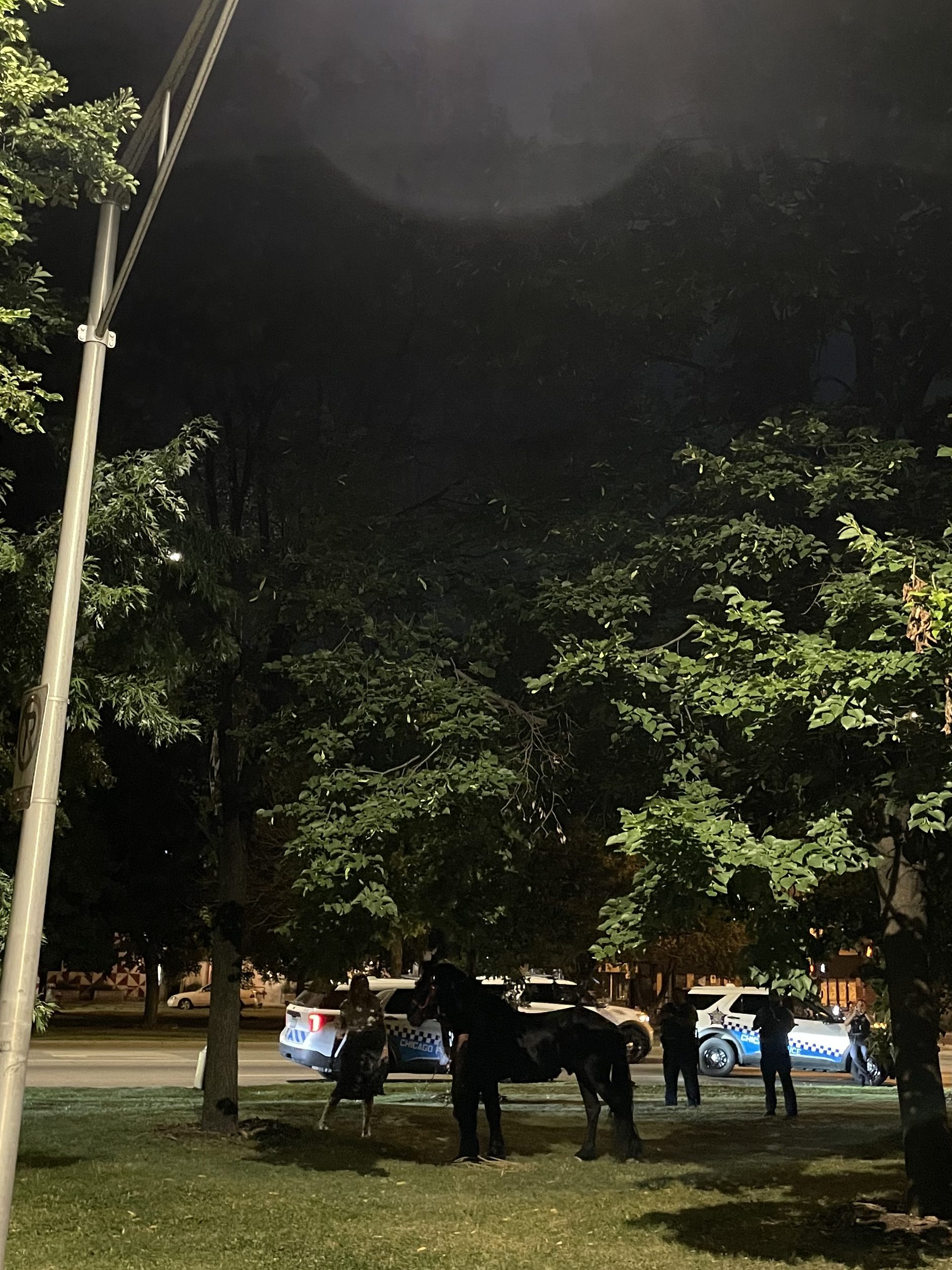
After the cowboy got the horse under control, we asked questions. It turns out there had been a local birthday party in the neighborhood. The birthday girl’s uncle had brought his horse from a ranch far away. The cowboy was the uncle. Case solved. Mission success… But I felt deflated. The mystery was gone… No more questions. I had answers. Success, right? Maybe. I had a cool experience, and I got my closure, but I would have loved to go back to that state of absolute curiosity. I no longer had the privilege to sit back and imagine the wild possibilities: What if it were the last wild horse in America? What if it was a mirage? A spirit from horses past? Anything could have been real in my head. That infinite possibility. It’s such a powerful state because it lets our minds tap into the curiosity that drives humankind.
Once I knew the truth, I couldn’t do anything with it. Sure, I knew what happened, but what did that knowledge mean? Is there meaning in knowing? Is there feeling in knowing? To each their own, but for me, knowing felt like a burden. It weighed on my curiosity.
Broadening this: humans have an innate desire to learn, categorize, and make sense of themselves and the world. As we age, we collect answers to our questions. But in doing so, we can lose the imagination of what could be. Maybe curiosity is a biological mechanism that pushes us to uncover survival-critical information. Perhaps we lose that curiosity once we reach a state where our needs are met and we can survive comfortably. I could be reading into it too much, and that’s all it is. But what if there is something more to it? What if our curiosity is a superpower, and information is its kryptonite?
In this time of instant information and gratification, so many things are answered at the push of a button. The internet pacifies our biological gift of curiosity. What if, just what if, the systems that control us actually invite us to live under a crushing burden of knowing. What if we are intentionally flooded with so much information (even information that incriminates the system) to handicap our curiosity? Surely the system and the status quo benefit from it. If we no longer have to push the boundaries to learn, we become more controllable people. If the answers to our mysteries are served to us on a silver platter, we become more controllable.
So stay present. Interact with the environment around you. Use your free will. Find and solve mysteries- or don’t… Maybe just finding mysteries is enough, and our curiosity does the rest. To each their own. I only ask these questions to ponder myself and invite dialogue. There are no definitive answers. Everything is circumstantial and context-dependent. However, I do have one more question: what if the key is not solving mysteries, but entertaining them? Living amongst them? Being one?
 Bop Lic Blog
Leave a comment